Table of Contents
Toggle5 Main Devices for CCTV Installation :
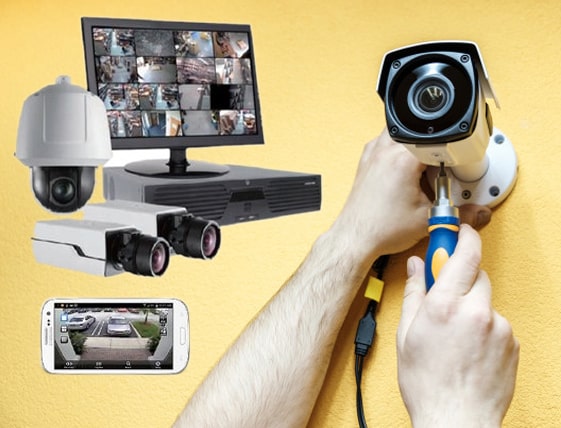
A CCTV camera allows you to significantly reduce the cost of protecting
your business premise and your assets. The systems reliably provide quality
and seamless monitoring. This gives you some peace of mind as you go about
your daily operations.
Whether your business is a retail outlet or a commercial property, you need to
make careful and well-thought considerations when it comes to your security.
You need quality cameras bearing in mind that there are many CCTVs in the
market today. With a quality CCTV system, you are assured of enhanced
efficiency as well as increased productivity in your operations.
At the same time, there are many advantages of CCTV installation in your
business premise including;
- Reducing the risk of your belonging
- Reducing the risk of selling Products & illegal Activity
- Enhanced safety within your business premise.
- Reduced employee or staff incidents.
- Monitoring your staff’s working hours
Before looking at the benefits of having a video surveillance system in
your business, it is imperative that you understand what CCTV means and
what it stands for.
What is CCTV?
A CCTV is a video surveillance system that is placed in security cameras to help
record images and videos in a home, business property, and even on the roads.
The camera works by monitoring, recording video images, and transmitting them
to a monitor. A CCTV is therefore used primarily for security purposes. It monitors
and offers round-the-clock surveillance on private and public property. It is also used
in preventing and investigating a crime.
What does CCTV stand for?
CCTV stands for Closed Circuit Television. It is a closed circuit system since it’s the
signal transmission is not open like in the case of broadcast television. CCTV transmits
footage to a different monitor, while the TV in the system transmits moving images to
different monitors. It is also imperative that you know what a CCTV system is. A CCTV
system works by monitoring a premise on a 24 hr basis. It consists of a lens, monitor,
camera, and recorder. Therefore, the camera will continuously pick images. The captured
images are then sent to a recording device; then to the different monitors.
Types of CCTV Camera-
- Dome camera-
- Bullet camera-
- Wireless Camera
- Infrared/ heat sensor cameras
- Long Range Night Vision CCTV Cameras
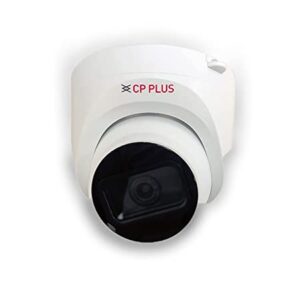
Dome camera–
Dome cameras are often indoor cameras. These cameras are not suitable for
outdoor or open environments, as these cameras don’t have- UV protection, or
waterproof protection. However, these cameras also have night vision, and may
also be attached to the external mic and sometimes they also come with the inbuilt mic.
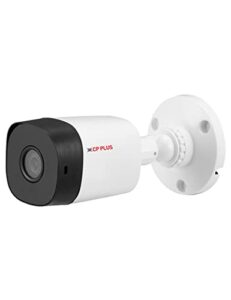
Bullet Camera-
Bullet cameras can be used both indoors and outdoors. These cameras are specially
designed for the open environment and have a better angle of rotation when compared
to the dome camera. These cameras have UV (ultraviolet) protection from the sunlight
and these cameras also come with night vision support.
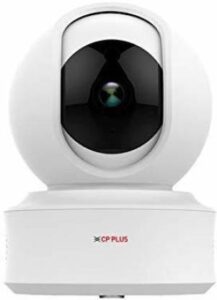
Wireless Camera-
Wireless cameras come with both- Indoor and Outdoor variants.These cameras often
Share the recorded videos over the wifi connection and sometimes they also have an
internal storage option and may also have an sd card slot. This type of camera is the
most modern form of a camera in the field of surveillance. Nowadays these cameras
are equipped with internal batteries to power themself.
Infrared/ Heat sensor Camera-
Infrared or heat-sensing cameras have a special sensor to see only the
heat of the human body. These cameras can only see thermal images.
These cameras also have motion-detection features along with heat-sensing
capabilities. These types of cameras are often used in remote areas and can
also be used in the field of medicine to see the high body temperature.
Long Range Night Vision CCTV Cameras:
Long-range night vision camera helps protect your home and business
property from unauthorized access during nighttime and to detect security
objects in the dark. These cameras come with an IR range of more than 100
meters, which can further be increased with an IR illuminator.
Long-range night vision cameras are weatherproof and are protected with a
metal housing that safeguards them from water and dust.
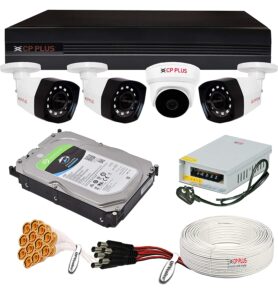
Minimum Hardware Requirement for CCTV Wired camera
set up & Installation [2.4 MP & 5 MP 4 channel Camera] 
(i) Number of Cameras
(ii) DVR
(iii) 1TB HDD
(iv) Cable Bundle
(v) Power Supply (12 volt, 5 Ampere)
[for 2.4MP Camera] (12Volt,10 Amp)
[for 5MP Camera]
(vi) Wifi Connection
(Vii) Monitor or Laptop
Availability of Camera from popular Brand:
(i) Single Dome & Bullet Camera
(ii) Combo offer [ 1 Dome + 3 Bullet + 1 TB HDD]
(iii) Combo offer [ 2 Dome + 2 Bullet + 1 TB HDD]
Requirement of Wireless CCTV Camera Set Up 
(i) Brand Name
(ii) Model Name
(iii) SD card [For storage Capacity]
(iv) Wi-fi Connection
Example:
Model Name: CP Plus E – 21 Price Rate for 1 CCTV:
RS@2500, Storage 64 GB @ RS 700,
Installation@RS 150, Recording Days 12 to
15 Days, Move 360 angle in any direction
HD vs IP (internet) camera:
HD camera–
These HD cameras are analog cameras, which means they record the video
and then encode the video into an electrical signal to transfer them over the
co-axial cable.HD cameras often come at an economical cost, but they have
a life span of only 6 to 7 years. After 7 years there will be a decrease in the
video quality.
IP camera:
IP cameras have better resolution when compared to HD cameras.
These cameras can perform video processing at the camera level.
This means the IP camera may not require any kind of video
processing hardware and these cameras can be directly connected
to the PC, wifi, or router and can be streamed over the network.
However, these cameras come at an expensive cost and also require
a POE switch to connect multiple IP cameras to the NVR.
The requirement of NVR is only limited to video recording, if there is no
need for saved video then these cameras may be streamed directly over
a network without the requirement of any hard drive.
Note
Both HD and IP cameras may replace each other. Both these cameras are
designed for some specific use. If you are planning to cover a large area
then IP cameras will be recommended for you as they have better resolution,
no quality loss because of the Ethernet cable, and can be directly connected to
the Internet to save cable costs without any use of NVR. Whereas HD cameras
are used for shops, home security, and specifically for less area coverage.
In order to calculate the estimated required disk
space for the CCTV setup, you will first need to
identify a few things, such as:
- Number of cameras
- Number of recording hours per day
- number of days stored
- Resolution of the camera
- Video quality, and
- Compression type or video format
CONCLUSION :
Nowadays, people prefer installing high-definition CCTV cameras on
their premises. Not just it offers high-quality surveillance but is available
at an affordable price range. This category includes HD CCTV cameras
for home and business buildings, wireless CCTV cameras, mobile DVRs
for buses and trucks, HD DVRs, Vehicle License Plate Readers CCTV
Cameras, 1.0/ 1.3/ 2.0/ 3.0 Megapixel IP Cameras, long-range night vision
CCTV cameras, and many more.